 pensioner support
 Attendance Allowance ignores income, ignores savings, ignores whether you own your home, and does not require a diagnosis or a carer. It is assessed on one thing: the help a person needs. Almost every reason people give for not applying describes a rule that does not exist.
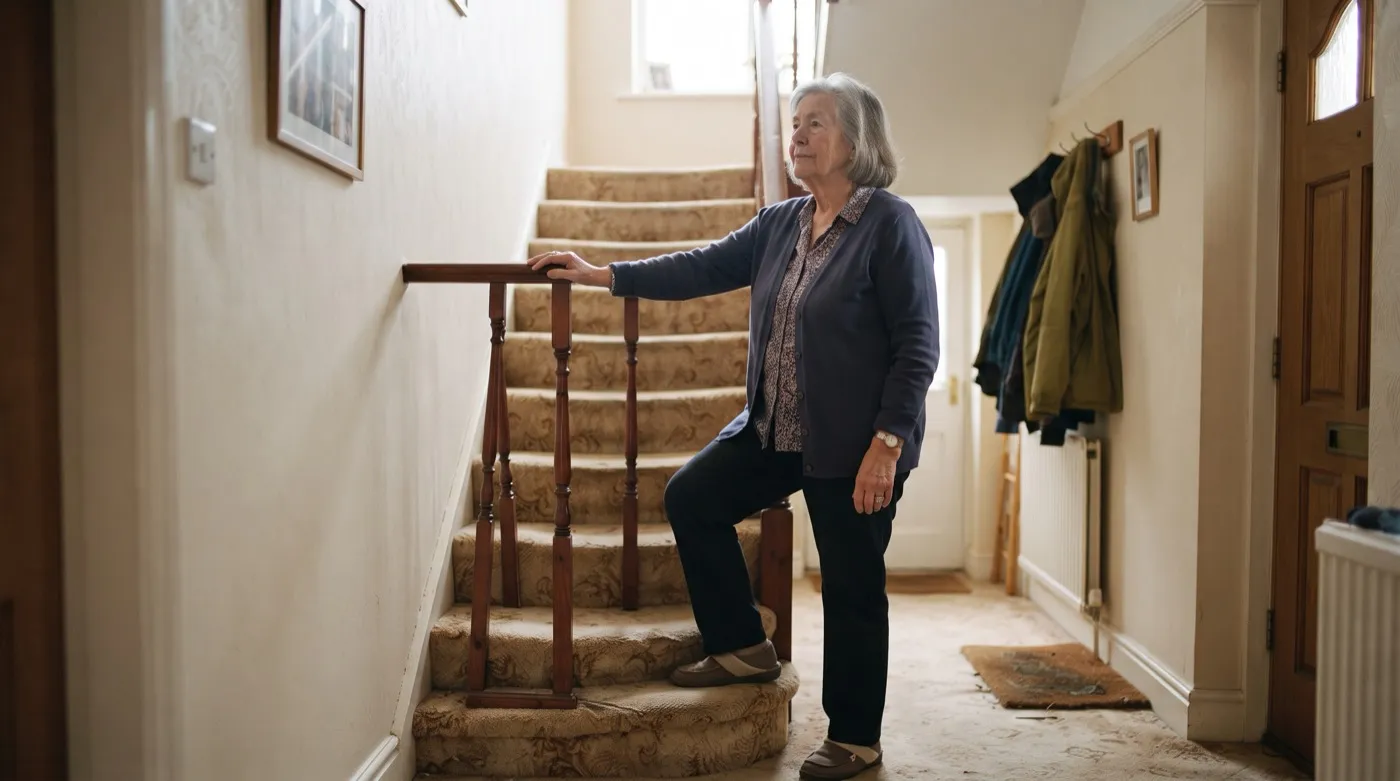
Attendance Allowance is for people over State Pension age who need help with personal care or supervision because of a physical or mental health condition.
It sits oddly in the benefits system. Most support for pensioners is means-tested and tapers away as income rises. This one does not, and that single difference is the source of most of the confusion around it.
What it pays
There are two rates, and no amounts in between.
| Rate | Weekly | When it applies |
|---|---|---|
| Lower | £73.90 | Frequent help or supervision needed during the day, or at night |
| Higher | £110.40 | Help or supervision needed both day and night, or the person is nearing the end of life |
The money is tax-free and comes with no conditions on how it is spent. It is not restricted to paying for care; many recipients use it for taxis, heating, laundry, help in the garden or ready-prepared meals.
What it is not assessed on
This is the part worth stating directly, because each of these is a reason people routinely give for not applying:
- Not income. A workplace pension, a full State Pension or earnings make no difference.
- Not savings. There is no capital limit of any kind.
- Not home ownership. Owning a house outright is irrelevant.
- Not a diagnosis. A specific condition does not have to be named. It is the resulting need that counts.
- Not whether anyone actually helps. People living alone with nobody to assist them qualify on the basis of the help they need.
- Not National Insurance contributions. Unlike the State Pension, no contribution record is required.
 it does not reduce other benefits
Attendance Allowance is not counted as income for Pension Credit, Housing Benefit or Council Tax Reduction. It frequently increases them, because receiving it can bring a severe disability addition into the Pension Credit calculation. Claiming it is not a trade against existing support.
What "help" actually covers
The assessment is broader than people assume. Needing help or supervision can include difficulty with:
- Washing, bathing or showering safely
- Dressing and undressing
- Using the toilet, or managing continence
- Eating, or cutting up food
- Taking medication correctly and at the right times
- Getting in and out of bed, or moving around the home
- Being safe — risk of falls, confusion, leaving a cooker on, becoming disorientated
- Communicating, or coping with the effects of a sensory impairment
Supervision counts even where no physical task is involved. Someone who can wash and dress themselves but is at risk of falling, or who needs reminding to take medication, may still qualify. Conditions that come and go — arthritis that is worse on some days, for instance — are assessed on the overall pattern.
The six-month rule, and the exception
Help must normally have been needed for six months before an award begins. A claim can be made earlier; payment runs from the point the six months is met.
The exception is for people nearing the end of life. Special rules apply: the higher rate is awarded without the qualifying period and claims are fast-tracked. These claims are usually supported by a clinician's form.
Scotland is different
Attendance Allowance has been replaced in Scotland by Pension Age Disability Payment, administered by Social Security Scotland rather than the Department for Work and Pensions. The rates match and the purpose is the same, but new claims in Scotland go to Social Security Scotland. Existing Attendance Allowance awards are being transferred automatically.
The form is the obstacle
The claim form runs to dozens of pages, and that is the practical barrier for most people — more than eligibility. Two things make a real difference to the outcome:
- Describe a bad day, not an average one, and say how often bad days occur. Many people instinctively understate their difficulties.
- Say how long tasks take and what happens without help. "I manage" tells the assessor nothing; "it takes forty minutes and I have to sit down twice" tells them a great deal.
Free help with the form is available from Citizens Advice, Age UK and local welfare rights services. They complete these applications routinely and know what the assessment is looking for. No commercial service has any advantage over them.
What happens after a claim
Most decisions are made on the form itself; a face-to-face assessment is uncommon. Awards may be indefinite or for a fixed period. If a claim is refused, there is a right to ask for a mandatory reconsideration and then to appeal — and a meaningful proportion of refusals are overturned, so a first refusal is not the end of it.
Once in payment, Attendance Allowance may also entitle a carer to Carer's Allowance or a carer element in other benefits, and it can qualify the household for a Council Tax disability reduction.
The point worth taking away
Attendance Allowance is assessed on need, not on money. If daily life has become harder — washing, dressing, remembering medication, staying safe — then income, savings and home ownership are all beside the point, and a successful claim can increase Pension Credit rather than reduce it. The barrier is the form, and free help with it is widely available.
sources
General information. This article is sponsored content published by Riescola Pres, a service of Exigon Consulting OÜ. It explains published public rules and figures and is not personal financial, tax or legal advice. Riescola Pres is independent of, and not endorsed by, GOV.UK, the Department for Work and Pensions or HM Revenue & Customs, and no application can be made through this website. Any amounts shown are the official published rates for the stated period or clearly labelled worked examples; what an individual receives depends on their own record and circumstances. Figures correct as at 15 October 2026.
 the weekly bulletin
 The week's pension and retirement reporting, in one email.
One email a week on the State Pension, tax in retirement and the support that pensioners can apply for. Free to receive, and you can unsubscribe from any edition.
Double opt-in. Your address is used for this newsletter and is not passed to third parties.
 pensioner support
 state pension